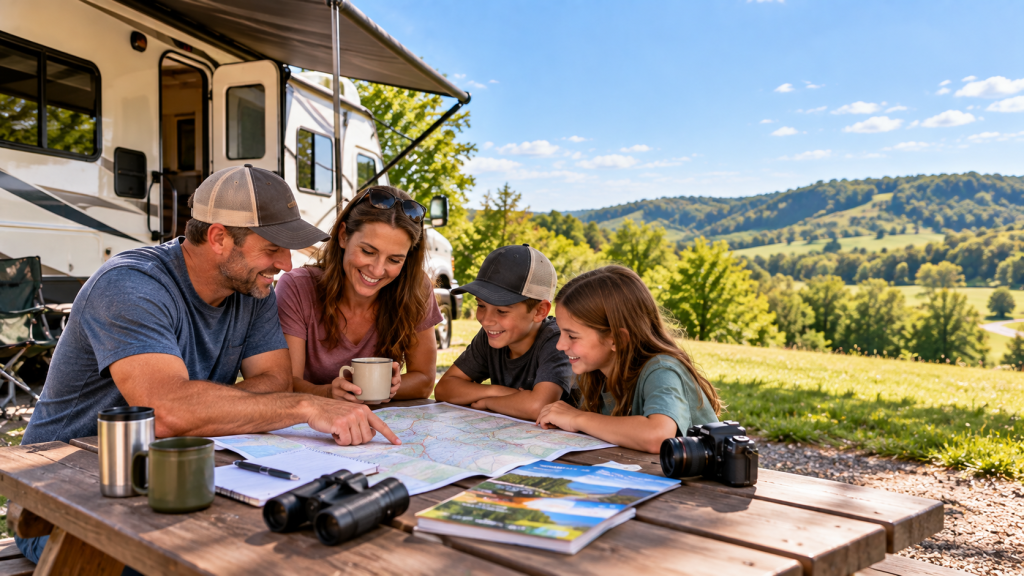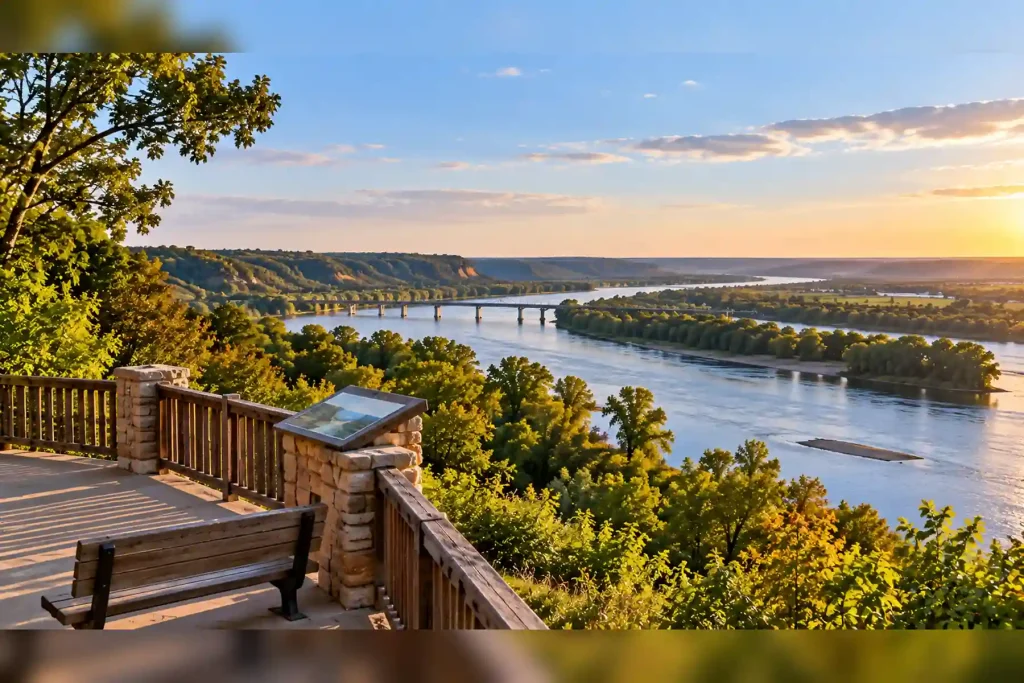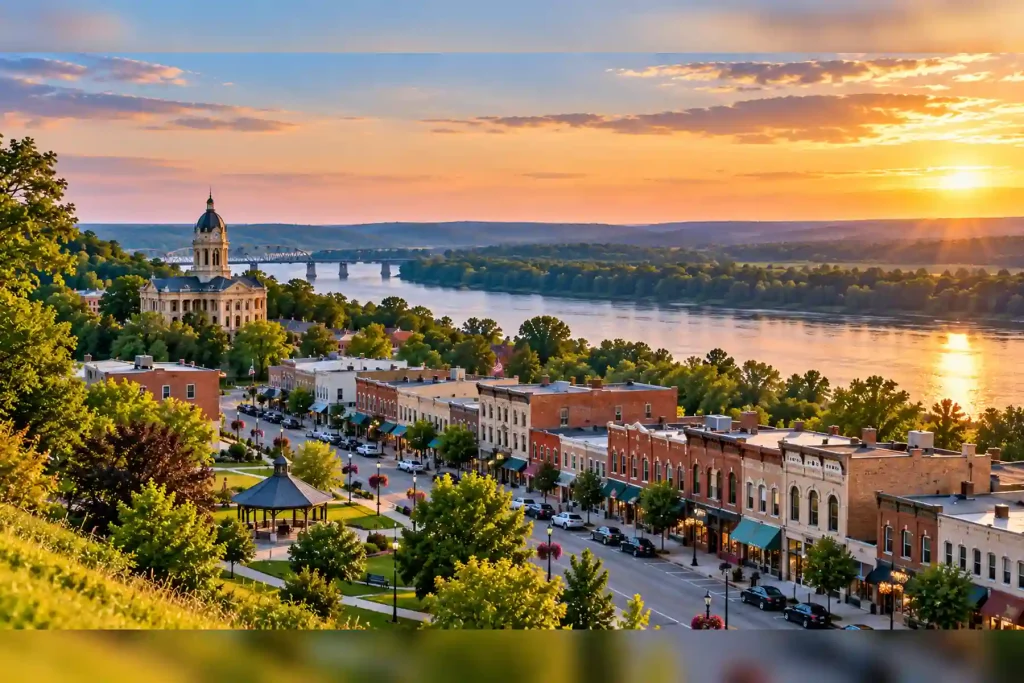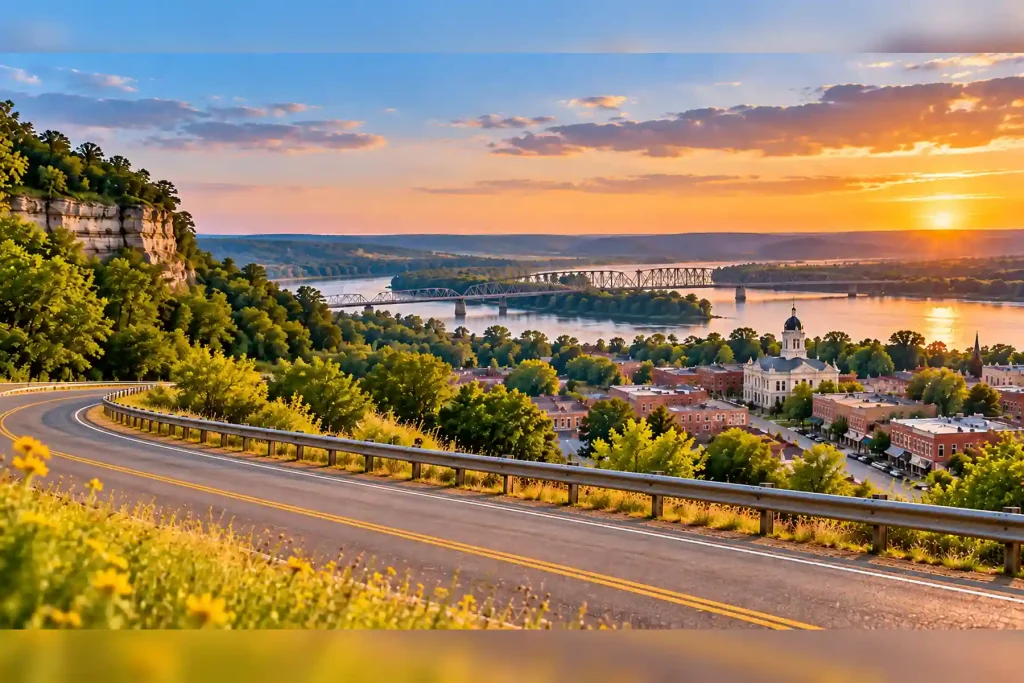

An Omaha to Sioux City RV road trip is an easy way to explore the Missouri River corridor without spending an entire vacation behind the wheel.
The direct drive between Omaha and Sioux City is roughly 97 miles, making it considerably shorter than many interstate RV trips. For most travelers, I-29 provides the primary route north through western Iowa.
You could drive directly between the two cities, but doing that would mean passing several places that can make the journey much more interesting.
Wildlife refuges, Missouri River history, Loess Hills scenery, small western Iowa communities, historic Lewis and Clark sites, riverfront parks, and hiking trails can all become part of an Omaha to Sioux City RV road trip.
The relatively short distance also makes this route useful for a weekend.
Leave the Omaha area in the morning, stop somewhere along the way, arrive in Sioux City with plenty of time to explore, then dedicate the next day to the city’s outdoor and historical attractions.
For travelers staying near Omaha or Plattsmouth, it can also become another route in a larger series of Midwest RV adventures.
Why Take an Omaha to Sioux City RV Road Trip?
Long RV trips are not always better RV trips.
Sometimes a shorter route gives you more time to actually enjoy the destination.
An Omaha to Sioux City RV road trip works particularly well because you can combine interstate travel with nature, history, scenic landscapes, and several opportunities to get out of the vehicle.
Instead of spending six or eight hours towing, you can take your time.
Stop at a wildlife refuge.
Leave I-29 for part of the Loess Hills.
Have lunch in a small town.
Arrive in Sioux City early enough to set up camp before dark.
Then spend the following day hiking, exploring the Missouri Riverfront, and learning more about Lewis and Clark.
The route can work for couples, families, history enthusiasts, hikers, birdwatchers, and RV travelers looking for an easy weekend trip from eastern Nebraska.
How Far Is Omaha From Sioux City?
The road distance from Omaha to Sioux City is approximately 97 miles.
In a passenger vehicle, that makes Sioux City a relatively quick drive.
An RV changes the calculation slightly.
Towing speeds, wind, construction, fuel stops, weather, and rest breaks can all increase travel time.
That is not a disadvantage on this route.
Because an Omaha to Sioux City RV road trip is relatively short, you can build extra time into the schedule without sacrificing an entire day.
Rather than planning around the fastest possible arrival, consider turning the drive into part of the vacation.
Start Your Omaha to Sioux City RV Road Trip Near Omaha
Before heading north, prepare the RV for highway travel.
Check your tires, lights, hitch connections, fuel, propane, storage compartments, and anything inside the RV that could shift while driving.
Weather deserves particular attention.
Western Iowa and eastern Nebraska can experience strong winds, and crosswinds may be especially noticeable when towing a travel trailer or driving a tall motorhome.
If you are staying at Merritt Beach RV Park in Plattsmouth before starting your Omaha to Sioux City RV road trip, you can use the campground as an Omaha-area home base while preparing for the journey.
Merritt Beach currently offers overnight, monthly, and seasonal RV stays with water hookups, 30/50-amp electrical service, swimming and fishing lake access, and recreational areas. The campground is about 30 minutes from the Omaha metro.
That gives travelers the option to spend a night near Omaha before starting north the following morning.
First Stop: DeSoto National Wildlife Refuge
One of the best stops on an Omaha to Sioux City RV road trip is DeSoto National Wildlife Refuge.
The refuge is located approximately 25 miles north of Omaha near Missouri Valley and Blair, making it an easy early stop before continuing toward Sioux City.
DeSoto covers 8,365 acres along the Missouri River and includes DeSoto Lake, bottomland forests, prairie, wetlands, and important habitat for migratory birds.
That gives the first part of your road trip a completely different feel from interstate driving.
Instead of stopping only for fuel, you can spend an hour or several hours around wildlife, water, and Missouri River history.
Visit the DeSoto Visitor Center and Bertrand Exhibit
DeSoto is more than a wildlife stop.
The visitor center houses artifacts recovered from the Steamboat Bertrand, which sank in the Missouri River in 1865.
Nearly 250,000 artifacts from the wreck are preserved within the refuge’s visitor center, creating a remarkably detailed look at goods being transported during the nineteenth century.
That makes DeSoto particularly useful on an Omaha to Sioux City RV road trip because it combines outdoor recreation with history.
If the weather is poor, spend more time inside the visitor center.
If conditions are good, continue onto the refuge roads and trails afterward.
The current visitor center schedule is Tuesday through Saturday, excluding certain federal holidays, so verify operating information before making it the centerpiece of your trip.
Look for Migrating Birds and Bald Eagles
Wildlife viewing at DeSoto varies considerably by season.
The U.S. Fish and Wildlife Service notes that large numbers of waterfowl use the refuge during spring and fall migration, while bald eagle viewing can be especially good during winter migration periods.
The visitor center viewing windows, auto-tour route, and Bob Starr Wildlife Overlook are among the places where visitors can watch birds and other wildlife.
If your Omaha to Sioux City RV road trip happens during migration season, bring binoculars.
If you do not have them, the visitor center may have loaner binoculars available.
Continue North Through Western Iowa
After DeSoto, return toward I-29 and continue north.
This portion of the Omaha to Sioux City RV road trip follows the same general Missouri River corridor that shaped much of the region’s transportation, settlement, and Lewis and Clark history.
Do not feel obligated to stop every 20 miles.
The route is short enough that one meaningful stop before Sioux City is usually better than several rushed stops.
If DeSoto occupied most of the morning, continue directly to Sioux City.
If you skipped DeSoto or only spent a short time there, consider incorporating part of the Loess Hills into the drive.
Add Some Loess Hills Scenery
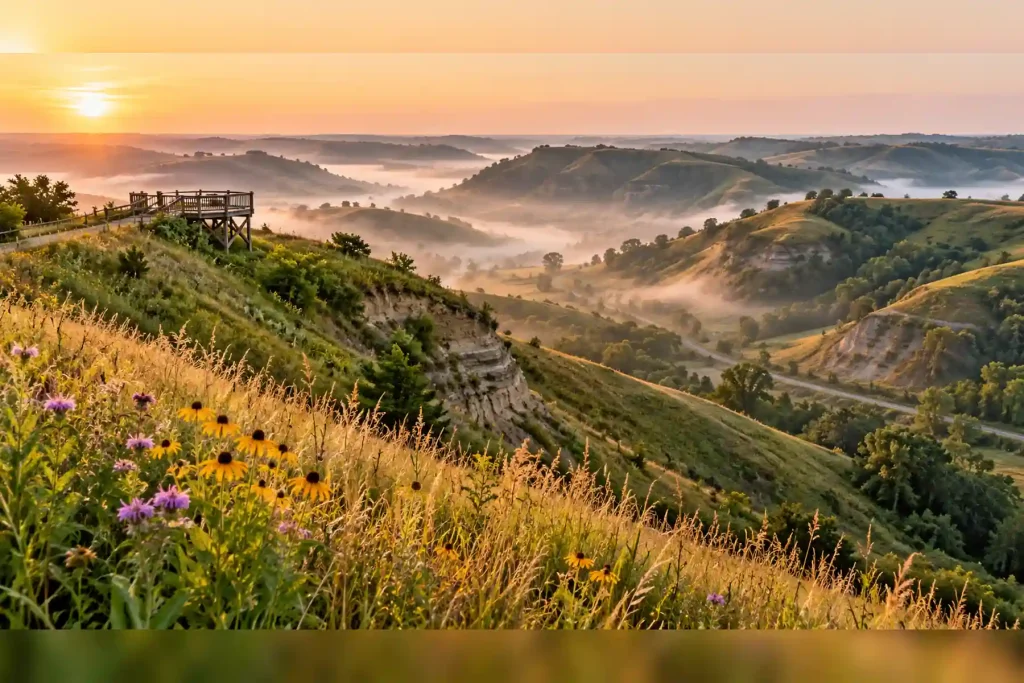
Western Iowa’s Loess Hills stretch for nearly 200 miles along the Missouri River Valley, from around Sioux City south toward Missouri.
The Loess Hills National Scenic Byway includes a 220-mile paved main route plus optional excursion loops. Some of the optional roads include gravel sections, which is important information for travelers pulling larger trailers.
You do not need to follow the entire scenic byway during an Omaha to Sioux City RV road trip.
Instead, consider the Loess Hills an optional scenic addition.
Travel the main RV-friendly route when practical, stop at an overlook, and then reconnect with I-29.
If you want to explore smaller gravel roads or more remote overlooks, leaving the RV at camp and returning in your tow vehicle may be the better strategy.
The Loess Hills are distinctive enough to deserve their own day trip, so do not feel like you have failed if you only see part of them on the way north.
Arriving in Sioux City
Once you reach Sioux City, get the RV situated before starting a full sightseeing itinerary.
This is especially helpful if you are towing.
After several hours of highway travel and sightseeing stops, parking the RV and switching to a smaller vehicle can make the rest of the day easier.
An Omaha to Sioux City RV road trip works best when the Sioux City portion includes both Missouri River history and outdoor recreation.
Fortunately, several major attractions fit those themes.
Explore the Lewis and Clark Interpretive Center
The Lewis and Clark Interpretive Center is one of the most relevant attractions for this route.
Located at 900 Larsen Park Road, the approximately 20,000-square-foot facility focuses on the Corps of Discovery’s time in the region and the expedition’s connection to present-day Sioux City.
The center also sits near the Missouri River, helping connect the exhibits to the geography of the journey.
This is a natural destination on an Omaha to Sioux City RV road trip because much of your drive has already followed the broader Missouri River corridor.
Instead of learning about Lewis and Clark as an isolated historical event, you can see how the expedition relates directly to the landscape you traveled through that day.
Visit the Sergeant Floyd River Museum and Welcome Center
Nearby, the Sergeant Floyd River Museum and Welcome Center provides another introduction to local river and transportation history.
The museum is housed aboard the historic Sergeant Floyd towboat at 1000 Larsen Park Road.
One practical benefit for RV travelers is that the National Park Service specifically lists bus and RV parking among the site’s amenities.
That can make it easier to include early in the day if you have not yet left your motorhome or trailer at camp.
The museum’s location near the Lewis and Clark Interpretive Center also means you can visit both without spending much of the day moving between attractions.
Walk Along the Sioux City Riverfront
After spending time indoors, head outside.
Chris Larsen Park along the Missouri River underwent a major riverfront redevelopment completed in 2024.
The updated riverfront includes trails, native plantings, gathering areas, recreation spaces, shelters, playground equipment, fitness stations, basketball courts, and a dog park.
This can be a good place to slow down during an Omaha to Sioux City RV road trip.
Instead of scheduling another museum immediately, walk along the river.
Let children use the recreation areas.
Give the dog some exercise where permitted.
Sit outside for a while.
An RV weekend does not need to be an uninterrupted sequence of attractions.
Visit the Sergeant Floyd Monument
For another important Lewis and Clark site, visit the Sergeant Floyd Monument.
Sergeant Charles Floyd was the only member of the Corps of Discovery to die during the expedition.
The 100-foot sandstone obelisk was completed in the early twentieth century and stands in a park overlooking the Missouri River Valley. Floyd’s remains are buried beneath the monument.
The location makes the monument especially meaningful after driving the Missouri River corridor yourself.
It is also one of those historical stops that does not require half a day.
Include it between larger attractions or visit later in the afternoon when you want a short outdoor stop.
Spend Time at Stone State Park
For travelers who want hiking and Loess Hills scenery, Stone State Park should be one of the main outdoor stops on an Omaha to Sioux City RV road trip.
The park sits on the edge of Sioux City in the heart of the Loess Hills.
Iowa DNR describes it as an urban wildlife sanctuary where visitors can explore miles of trails through the area’s distinctive landscape.
Stone State Park has more than 15 miles of trails for hiking, with additional routes supporting activities such as mountain biking and horseback riding.
That makes it easy to choose an outing that fits the amount of time you have.
You do not need to spend five hours hiking.
A short trail can still give you a good view of the terrain.
Choose a Short Hike at Stone State Park
If you are visiting Stone State Park near the end of your trip, a shorter route may be the best option.
The park’s current trail information includes routes ranging from very short walks of a few tenths of a mile to longer trails such as the 1.8-mile Broken Toe Trail.
The Carolyn Benne Nature Trail, for example, is listed at approximately 0.4 mile, while Buffalo Run is about 1.1 miles.
Select the trail based on weather, daylight, and your group’s energy level.
There is little reason to turn the final afternoon of an Omaha to Sioux City RV road trip into an endurance event.
Visit Dorothy Pecaut Nature Center
The Dorothy Pecaut Nature Center sits near Stone State Park and provides another way to learn about the Loess Hills.
Iowa DNR notes that the center has interpretive exhibits about the region, including a walk-under prairie exhibit, aquarium, hands-on children’s area, and information about the natural environment.
This makes it a particularly useful stop for families.
It can also serve as an alternative if the weather is not ideal for a long hike.
A rainy afternoon does not necessarily mean abandoning your outdoor-focused Omaha to Sioux City RV road trip.
Spend time at the nature center, then take a shorter trail if conditions improve.
A Simple 2-Day Omaha to Sioux City RV Road Trip
For a weekend, keep the schedule manageable.
On Day 1, leave the Omaha area in the morning and travel north toward DeSoto National Wildlife Refuge. Spend enough time to see the visitor center and one outdoor area, then continue north toward Sioux City.
Get your RV settled before evening.
If you still have time, visit the riverfront or take a relaxed walk rather than starting another major attraction.
On Day 2, begin with the Lewis and Clark Interpretive Center and Sergeant Floyd River Museum.
Visit the Sergeant Floyd Monument next.
Use the afternoon for Stone State Park or Dorothy Pecaut Nature Center.
Then either spend another night in Sioux City or begin the return drive toward Omaha.
This gives your Omaha to Sioux City RV road trip history, wildlife, scenery, and hiking without trying to squeeze everything into one travel day.
Turn It Into a 3-Day Road Trip
An extra day allows you to explore the Loess Hills more deliberately.
Use the first day for DeSoto and the drive north.
Dedicate the second day to Sioux City’s Lewis and Clark attractions and riverfront.
Use Day 3 primarily for Stone State Park, Dorothy Pecaut Nature Center, and additional Loess Hills scenery.
This is often a better choice for travelers who enjoy hiking.
Instead of watching the clock because you need to drive back toward Omaha, you can spend more of the final day outdoors.
A three-day Omaha to Sioux City RV road trip also gives you room to change plans when weather affects hiking or wildlife viewing.
RV Travel Tips for the Omaha to Sioux City Route
Although this is a short route, basic RV planning still matters.
Before leaving, check I-29 conditions and the weather across the entire corridor rather than looking only at Omaha and Sioux City.
Pay particular attention to wind if you are towing.
Plan your fuel stops while you still have plenty of fuel rather than waiting until the gauge is low.
If you plan to leave I-29 for Loess Hills sightseeing, confirm that the road is appropriate for your RV. The main scenic byway is paved, but some optional excursion roads can be gravel.
At DeSoto, remember that access changes seasonally. The refuge’s South Gate and some roads and trails have seasonal opening periods, so follow current refuge maps rather than relying entirely on GPS directions.
Most importantly, leave enough room in your itinerary for delays.
RV travel is more enjoyable when a slower fuel stop or an unexpected hour at a wildlife refuge does not put the entire trip behind schedule.
When Is the Best Time for an Omaha to Sioux City RV Road Trip?
Spring through fall provides plenty of options, but each season creates a different trip.
Spring can be excellent for wildlife viewing around DeSoto and for cooler hiking conditions in the Loess Hills.
Summer provides long daylight hours, making it easier to combine scenic stops with an evening in Sioux City.
Fall brings another strong wildlife-migration period at DeSoto and seasonal color across prairie and wooded Loess Hills landscapes. The refuge notes that its fall waterfowl migration typically reaches its strongest period from late October into early December, depending on weather.
Winter can also offer wildlife opportunities, including bald eagle viewing at DeSoto, but RV travelers should account for freezing temperatures, winterized campgrounds, snow, and ice.
Always check campground operating dates before planning an overnight trip outside the main camping season.
Connect Sioux City With the Loess Hills Road Trip Cluster
An Omaha to Sioux City RV road trip also connects several topics in a broader regional travel itinerary.
If you enjoyed the landscape along western Iowa, plan a separate Loess Hills day trip from Omaha so you can spend more time at hiking areas and overlooks.
If you want another north-south scenic route, explore the scenic drives near Omaha covered elsewhere in this cluster.
Travelers who prefer shorter local excursions can explore small towns near Omaha or take a Nebraska City day trip from Omaha.
You can also compare this route with an Omaha to Lincoln RV road trip or an Omaha to Des Moines RV road trip.
Together, these routes show how many different weekend trips can begin from one Omaha-area campground.
Use Merritt Beach RV Park as Your Omaha-Area Home Base
If your Omaha to Sioux City RV road trip is part of a larger Midwest vacation, Merritt Beach RV Park can provide a home base before or after the trip.
The campground in Plattsmouth currently offers overnight stays as well as longer monthly and seasonal options. Water and 30/50-amp electric service are available at sites, along with access to the campground’s swimming and fishing lakes.
Weekly stays are also available for travelers who want more time to explore the Omaha area without committing to a full month.
That can work particularly well if you want to complete several road trips from the same location.
Spend one day around Omaha.
Travel north toward Sioux City.
Return and rest.
Then head toward Nebraska City, Lincoln, or western Iowa on another day.
Instead of moving your RV every morning, you can use one campground as the starting point for several regional adventures.
Plan Your Omaha to Sioux City RV Road Trip
An Omaha to Sioux City RV road trip proves that a worthwhile RV getaway does not require hundreds of miles.
The direct route is short enough for a weekend, but the corridor gives you plenty of opportunities to slow down.
Explore wildlife and nineteenth-century river history at DeSoto National Wildlife Refuge.
See part of western Iowa’s Loess Hills.
Follow Lewis and Clark history into Sioux City.
Walk along the Missouri Riverfront.
Visit the Sergeant Floyd Monument.
Finish with a hike at Stone State Park.
Most importantly, do not try to visit every possible stop just because the route is short.
Choose the experiences that interest you most and give yourself enough time to enjoy them.
The best Omaha to Sioux City RV road trip is not the one where you arrive fastest. It is the one where the Missouri River corridor, Loess Hills, wildlife, history, and small discoveries along the way become part of the vacation itself.