Every memorable RV camping trip starts with reliable equipment. From freshwater hoses and electrical connections to cooking supplies and outdoor furniture, the gear you bring can make a noticeable difference in how smoothly your weekend unfolds.
But after months of regular use, even dependable camping equipment can become worn, damaged, or misplaced.
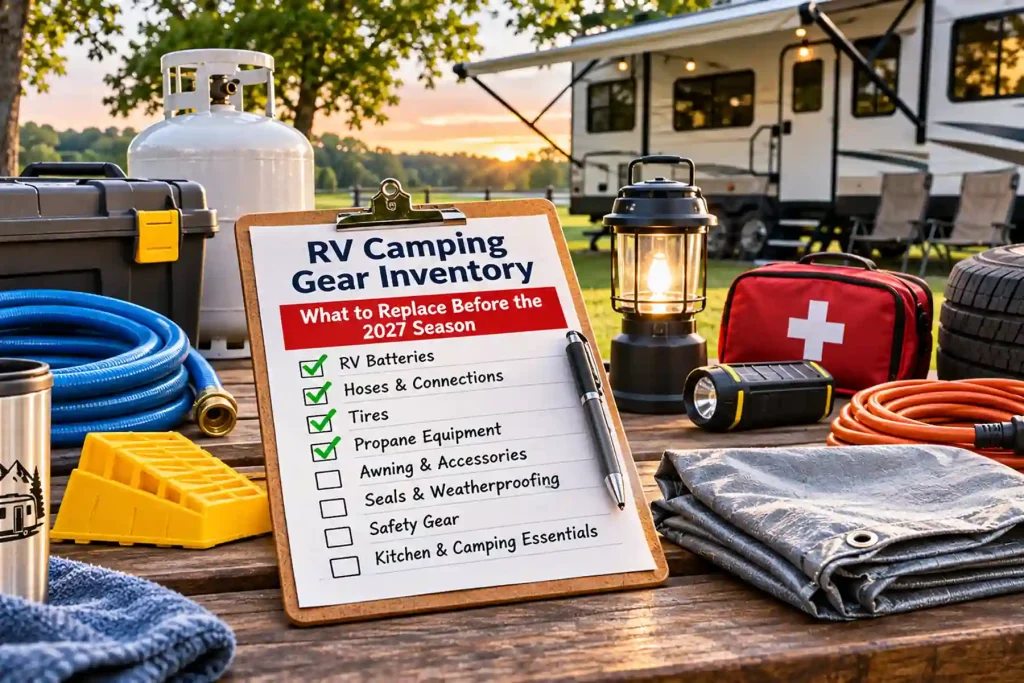
That’s why the offseason is an ideal time to complete an RV camping gear inventory checklist before the 2027 camping season begins.
Instead of discovering a leaking hose, broken camping chair, or missing electrical adapter during your first spring getaway, you can inspect your supplies early, identify what needs replacing, and organize your RV for the months ahead.
Whether you’re planning occasional weekend trips or a full season of RV camping near Omaha, this checklist will help you prepare your equipment without unnecessary spending.
Why an RV Camping Gear Inventory Checklist Matters
Many RV owners accumulate equipment over several camping seasons.
Some supplies remain in exterior compartments, while others are stored in kitchen cabinets, closets, or containers at home.
Without a regular inventory, it’s easy to forget what you already own.
You might purchase duplicate accessories, overlook damaged equipment, or arrive at the campground without something essential.
A yearly inventory helps you:
- Identify broken or worn camping gear.
- Replace important safety equipment when needed.
- Avoid purchasing duplicate supplies.
- Organize storage compartments.
- Prepare for changing camping needs.
- Set a realistic equipment budget.
- Reduce last-minute shopping before trips.
- Keep your RV ready for frequent weekend use.
November through February is a practical time to complete this task, especially when your camper isn’t being used regularly.
You don’t need to replace everything each year. The goal is to understand what you already have, what remains in good condition, and what should be repaired or replaced.
1. Start by Organizing Your RV Camping Equipment
Before purchasing anything new, gather your equipment and organize it by category.
Depending on how your RV is stored, you may need to complete your inventory across several sessions.
Start with the items you can safely access, then review the remaining equipment when you reopen your camper for spring.
Divide Your Supplies Into Categories
A simple inventory system could include:
| Equipment Category | Examples |
| Water equipment | Freshwater hoses, filters, regulators |
| Electrical accessories | Shore-power cords, adapters, surge protection |
| Safety equipment | Fire extinguishers, alarms, first-aid supplies |
| Outdoor furniture | Camping chairs, tables, outdoor mats |
| Cooking equipment | Cookware, utensils, food storage containers |
| Recreation supplies | Fishing gear, games, swimming accessories |
| RV tools | Tire gauge, basic hand tools, leveling equipment |
| Personal supplies | Bedding, towels, toiletries, rain gear |
Once everything is sorted, examine each item.
You can use four inventory labels:
Keep: The equipment is in good condition and ready for another season.
Clean or service: The item can remain in use after appropriate cleaning or maintenance.
Replace: The equipment is damaged, expired, unreliable, or otherwise unsafe.
Donate or discard: The item is no longer needed. Dispose of damaged, hazardous, or regulated items through appropriate channels.
This process can help you make better use of your available RV storage space.
2. Inspect Freshwater Hoses and Plumbing Accessories
Freshwater equipment is one of the most important categories on your inventory checklist.
Campground water connections make everyday tasks such as washing dishes, showering, and preparing meals more convenient.
However, hoses and fittings can deteriorate over time, especially when exposed to sunlight, temperature changes, and frequent handling.
What to Inspect
Examine your freshwater supplies for:
- Cracked or stiff hoses
- Damaged fittings
- Worn rubber washers
- Leaks around connections
- Damaged pressure regulators
- Old or clogged water filters
- Unusual odors or visible contamination
Replace components that cannot be cleaned, repaired, or safely used according to the manufacturer’s instructions.
Avoid using ordinary garden hoses for drinking water. Choose hoses intended for potable-water use.
Keep Your Water Supplies Organized
Store drinking-water equipment separately from sewer and wastewater accessories.
Use labeled containers to prevent accidental mixing and make setup easier.
At Merritt Beach RV Park, seasonal and monthly RV sites offer water hookups, so properly maintained freshwater accessories are important for a comfortable stay.
3. Check RV Electrical Cords and Adapters
Electrical equipment deserves careful attention because damaged connections can create serious safety hazards.
Before the next camping season, inspect your shore-power cord, electrical adapters, and other approved accessories.
Signs That Electrical Equipment May Need Replacement
Watch for:
- Cracked or damaged insulation
- Bent or loose plug prongs
- Burn marks or discoloration
- Melted connector housings
- Exposed wiring
- Corrosion
- Connections that no longer fit securely
Stop using equipment that shows signs of overheating or electrical damage.
Do not attempt improvised repairs to damaged shore-power equipment. Have the system evaluated by a qualified RV technician or electrician when necessary.
The National Park Service’s RV fire safety recommendations emphasize using properly rated electrical connections and replacing damaged cords.
Confirm Your RV’s Electrical Requirements
Different recreational vehicles require different power connections.
Some RVs use 30-amp electrical service, while others require 50-amp service.
Merritt Beach RV Park offers 30/50-amp electrical service options, depending on the campsite.
Before visiting, confirm that your assigned site supports your RV’s requirements.
Avoid assuming that an adapter allows every appliance to operate simultaneously. Available power remains limited by the connection and electrical system.
4. Review Your RV Safety Equipment
Safety equipment should be one of the highest priorities in your inventory.
Even if an item looks fine, it may have reached the end of its recommended service life.
Fire Extinguishers
Check that your RV’s fire extinguisher is appropriate for the intended hazards, accessible, and in serviceable condition.
Inspect the pressure indicator when applicable, examine the unit for damage, and follow the manufacturer’s inspection and replacement instructions.
Replace extinguishers that are expired, damaged, recalled, or otherwise unsuitable for continued use.
Smoke, Carbon Monoxide, and Propane Detectors
Test each detector according to its manufacturer’s instructions.
Check expiration or replacement dates and replace batteries or the entire alarm when required.
Detector service life varies by product. Don’t assume every alarm lasts the same number of years.
First-Aid Supplies
Open your first-aid kit and check for missing or expired items.
Review basic supplies such as:
- Bandages and sterile dressings
- Medical tape
- Antiseptic products
- Disposable gloves
- Tweezers
- Emergency contact information
Replace expired products and include supplies appropriate for your family’s needs.
The U.S. Fire Administration’s RV fire safety guide provides additional recommendations for reducing fire and carbon monoxide risks.
Propane systems should be inspected by qualified professionals. Do not attempt to repair damaged propane components as part of a do-it-yourself inventory.
5. Inspect Outdoor Furniture and Campsite Accessories
Outdoor furniture is often used heavily throughout the camping season.
Chairs, tables, awnings, and recreational equipment are exposed to sunlight, moisture, and changing temperatures.
Before 2027, examine the items you typically use outside your RV.
Camping Chairs and Tables
Look for:
- Cracked chair frames
- Loose joints or fasteners
- Torn fabric
- Rusted components
- Damaged folding mechanisms
- Unstable table legs
Replace items that cannot safely support their intended loads.
A chair that collapses unexpectedly or a table that no longer stands securely isn’t worth keeping simply to avoid the cost of replacement.
Outdoor Mats and Storage Containers
Check outdoor mats for tears, mildew, or excessive wear.
Inspect storage bins for cracked lids, broken handles, or damaged seals.
Choose containers that protect supplies from weather and pests while remaining easy to transport.
Before placing outdoor structures or additional accessories at a seasonal campsite, review the campground’s rules and obtain approval when required.
Keeping your campsite organized supports a cleaner, more enjoyable experience for everyone.
6. Take Inventory of Cooking and Food Storage Supplies
Outdoor cooking is one of the most enjoyable parts of camping.
However, cooking supplies can gradually become incomplete as utensils are lost, containers break, or equipment wears out.
Review Your RV Kitchen Equipment
Check your:
- Pots and pans
- Cooking utensils
- Plates and bowls
- Cups and reusable water bottles
- Cutting boards
- Food storage containers
- Dishwashing supplies
- Grill accessories
- Cooler or portable food storage equipment
Replace cracked containers, damaged utensils, and cookware that can no longer be used safely.
For gas grills or propane-powered appliances, follow the manufacturer’s maintenance instructions and arrange professional inspection when needed.
Avoid Unnecessary Purchases
You don’t need an entire household kitchen inside your RV.
A compact set of dependable cookware and reusable utensils is often more practical than filling cabinets with duplicate items.
Think about the meals you regularly prepare while camping and keep the equipment that supports those activities.
7. Refresh Your Fishing and Lakeside Recreation Gear
If you enjoy camping near the water, don’t forget to include recreational equipment in your inventory.
Merritt Beach RV Park features a swimming lake and a separate stocked fishing lake, giving guests opportunities to enjoy lakeside recreation throughout the regular camping season.
You can explore the campground’s RV park amenities in Plattsmouth when planning your next visit.
Fishing Equipment Checklist
Inspect:
- Fishing rods and reels
- Fishing line
- Hooks and tackle
- Tackle boxes
- Landing nets
- Pliers and other accessories
- Appropriate personal flotation devices
Replace damaged fishing line, unsafe hooks, or equipment that no longer functions properly.
Before fishing, review applicable regulations and permit requirements through the Nebraska Game and Parks Commission.
Swimming and Outdoor Supplies
Review your:
- Towels
- Sunscreen
- Swimming accessories
- Water shoes
- Approved flotation equipment
- Outdoor games
- Reusable water bottles
Inspect life jackets for damaged straps, fasteners, and flotation material. Use properly fitted, approved equipment appropriate for each activity.
Remember that inflatable pool toys aren’t substitutes for suitable life jackets or adult supervision.
8. Check Your RV Tools and Setup Equipment
Every RV should have a basic set of tools and supplies appropriate for its design.
These items can help with routine tasks, inspections, and minor adjustments.
Essential Equipment to Review
Depending on your RV, useful items may include:
- Tire pressure gauge
- Wheel chocks
- Leveling blocks
- Flashlight or headlamp
- Basic hand tools
- Spare approved fuses
- Work gloves
- Measuring tape
- Manufacturer’s manual
- Emergency roadside assistance information
Inspect each item for damage or missing components.
Make sure tools are suitable for your particular RV and that you understand how to use them safely.
For towing and mechanical safety, follow your RV manufacturer’s guidance and have critical systems inspected by qualified technicians.
The Winnebago RV maintenance checklist provides additional guidance on equipment inspections and regular RV care.
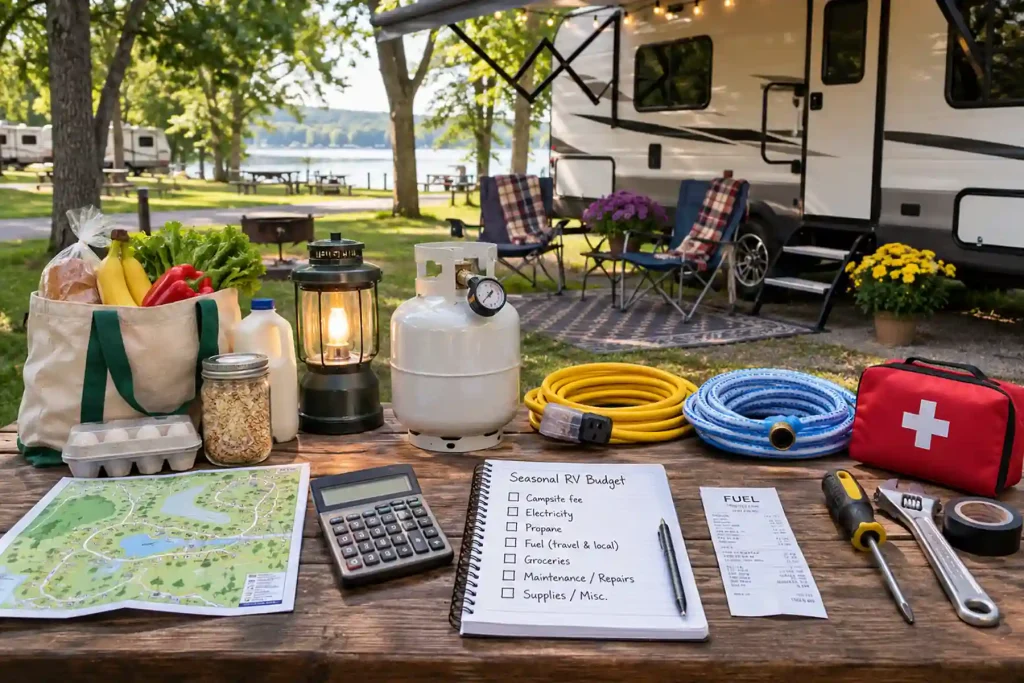
9. Create a Replacement Budget Before Spring
Once your inventory is complete, create a shopping list based on priority.
Not every worn accessory needs immediate replacement, but essential safety and utility equipment should come first.
Prioritize Your Purchases
Priority 1: Safety-critical equipment
Examples include damaged electrical cords, malfunctioning alarms, unsuitable fire extinguishers, and defective safety accessories.
Priority 2: Essential campsite equipment
This includes freshwater hoses, approved electrical accessories, leveling equipment, and other supplies required for safe, functional camping.
Priority 3: Comfort and recreation
Examples include camping chairs, outdoor games, fishing accessories, and optional campsite upgrades.
This approach helps you avoid spending your entire camping budget on accessories while overlooking equipment that needs immediate attention.
Keep an Inventory Record
A simple spreadsheet can help track:
| Item | Condition | Action Needed | Priority |
| Freshwater hose | Cracked fitting | Replace | High |
| Shore-power cord | Good condition | Keep | High |
| Fire extinguisher | Inspection needed | Check or replace | High |
| Camping chairs | One damaged | Replace chair | Medium |
| Fishing tackle | Incomplete | Restock | Low |
| Cooking utensils | Good condition | Keep | Low |
Update the list after major trips or at the end of each camping season.
Over time, this habit can make offseason planning easier and help reduce duplicate purchases.
10. Prepare Your RV Gear for Seasonal Camping Near Omaha
If you’re planning frequent camping weekends in 2027, organization can make every visit more convenient.
Rather than repeatedly packing everything from home, consider maintaining a dedicated collection of camping supplies inside your RV when storage conditions and campground rules allow.
Items such as cookware, nonperishable supplies, bedding, and games may be convenient to keep on hand.
However, avoid leaving medications, valuables, temperature-sensitive products, or food that could attract pests in an unattended camper.
Make the Most of a Seasonal Campsite
For Omaha-area campers who return to the same campground throughout spring, summer, and fall, a seasonal site can reduce repeated setup and packing.
Merritt Beach RV Park offers seasonal RV sites in Plattsmouth with water hookups, 30/50-amp electrical service options, and access to its swimming and fishing lakes.
Individual sewer hookups are not available, so wastewater pump-out services must be arranged separately through local providers.
The regular camping season runs from April 1 through October 31.
Before adding outdoor equipment or storage features to your campsite, review the park’s policies and confirm which items are permitted.
RV Camping Gear Inventory Checklist for 2027
Use this checklist before your first camping trip of the season.
Water and Electrical Equipment
- Inspect freshwater hoses and fittings.
- Check water filters and pressure regulators.
- Inspect shore-power cords and connectors.
- Verify RV electrical requirements.
- Replace damaged electrical accessories.
Safety and Essential Equipment
- Test smoke, CO, and propane detectors.
- Inspect fire extinguishers.
- Restock the first-aid kit.
- Inspect tire and wheel-related accessories.
- Check flashlights and emergency supplies.
- Arrange any needed professional safety inspections.
Outdoor and Recreation Supplies
- Inspect camping chairs and tables.
- Clean outdoor mats and storage containers.
- Review fishing equipment.
- Inspect life jackets and swimming accessories.
- Replace damaged games or recreational gear.
Cooking and Personal Supplies
- Check cookware and utensils.
- Inspect food storage containers.
- Replace worn cleaning supplies.
- Review bedding and towels.
- Organize toiletries and personal essentials.
- Create a replacement shopping list.
Completing these steps before spring can help reduce last-minute surprises and make your first camping weekend more relaxing.
Frequently Asked Questions About RV Camping Gear Inventory
How often should I complete an RV camping gear inventory?
A full inventory once a year is a practical starting point. You should also inspect important safety and utility equipment before trips and follow the manufacturer’s recommended maintenance schedule.
What RV camping gear should I replace first?
Prioritize damaged or expired safety equipment, electrical accessories, freshwater components, and essential setup equipment. Recreational and comfort-related purchases can generally come afterward.
When should I prepare my RV camping gear for 2027?
The offseason, particularly November through February, is a convenient time to review supplies and plan replacements. Complete any required spring inspections before your first camping trip.
Should I keep camping supplies inside my RV year-round?
Some items can remain in your RV if storage conditions and campground policies allow. Avoid leaving temperature-sensitive products, medications, valuables, or food that could attract pests in unattended storage.
What equipment should I bring for seasonal camping at Merritt Beach RV Park?
Essential supplies typically include potable-water equipment, electrical accessories appropriate for your RV, approved safety equipment, cooking supplies, and personal items. Campers should also account for wastewater management because individual sewer hookups are not available.
Does Merritt Beach RV Park offer seasonal RV camping near Omaha?
Yes. Merritt Beach RV Park is located in Plattsmouth, Nebraska, within convenient driving distance of Omaha and Bellevue. The campground offers seasonal RV sites during its regular April 1–October 31 camping season, subject to availability and applicable reservation terms.
Get Your RV Ready for Another Camping Season at Merritt Beach RV Park
Preparing for the 2027 camping season doesn’t have to be complicated.
By completing an RV camping gear inventory checklist during the offseason, you can identify worn equipment, prioritize important replacements, organize your supplies, and prepare for more enjoyable weekends outdoors.
A little preparation now can mean fewer interruptions when warmer weather finally arrives.
If you’re planning seasonal RV camping near Omaha, Merritt Beach RV Park offers a lakeside destination in Plattsmouth with water and electric hookups, a swimming lake, and a separate stocked fishing lake.
Ready to start planning your 2027 RV camping season?
Contact Merritt Beach RV Park to inquire about seasonal RV site availability, explore campsite options, or schedule a tour by appointment.
You can also call (402) 979-1196 to speak with the campground team.
Get your RV gear organized today so you can spend more time enjoying the outdoors when camping season returns.