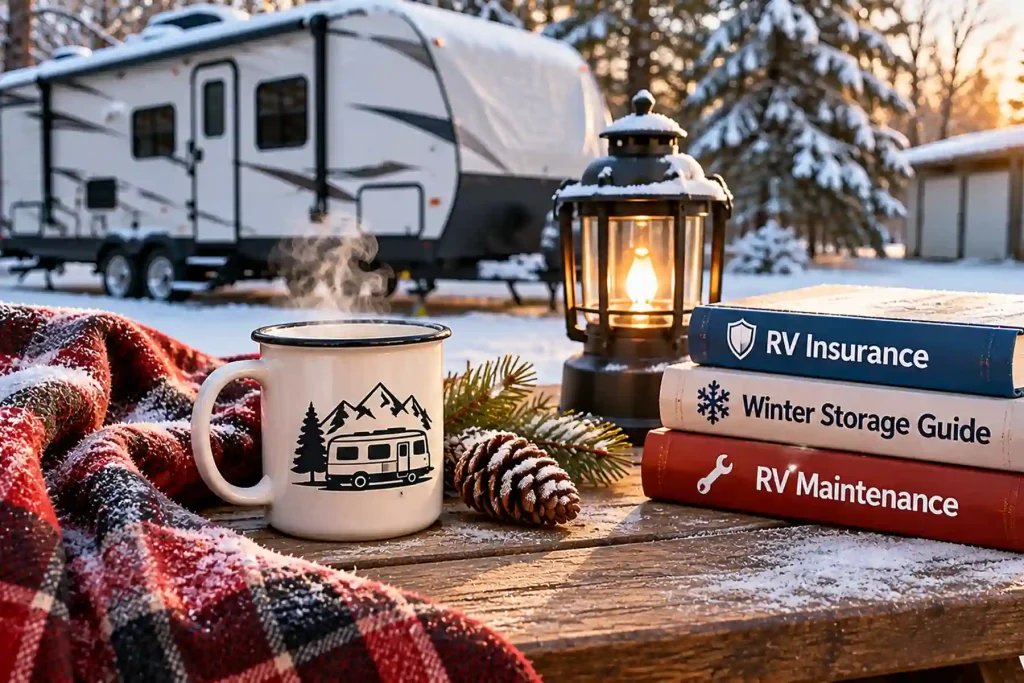
When camping season ends, most RV owners begin thinking about winterization. Draining water lines, protecting batteries, checking roof seals, and securing the camper are important steps before freezing temperatures arrive.
But there’s another part of winter preparation that deserves attention: your RV insurance policy.
Even when your recreational vehicle isn’t being driven or occupied, it may still be exposed to risks such as hail, wind, fire, theft, vandalism, and damage from falling objects.
Understanding RV insurance during winter storage can help you identify potential coverage gaps, avoid unexpected expenses, and make informed decisions about protecting your camper until spring.
For RV owners around Omaha, Bellevue, and Plattsmouth, Nebraska, reviewing insurance before the offseason is especially important because winter weather can be unpredictable.
Whether your RV is stored at home, in a commercial storage facility, or at a seasonal campground such as Merritt Beach RV Park, here are the insurance questions worth asking before leaving it parked for several months.
Why RV Insurance During Winter Storage Matters
It’s easy to assume that a parked RV faces fewer risks than one traveling on the highway.
While you may be avoiding certain driving-related hazards, winter storage introduces other considerations.
A strong storm could damage your camper’s exterior. A falling branch might strike the roof. Thieves could target equipment or belongings stored inside.
And if an unexpected incident occurs, the repair or replacement costs can be significant.
Insurance may provide financial protection against certain losses, depending on your policy.
However, not every policy covers every situation, and simply having RV insurance doesn’t guarantee that a particular type of damage will be covered.
Before winter begins, review your policy and speak with your insurance company about how your RV will be stored.
According to the National Association of Insurance Commissioners, comprehensive insurance generally addresses certain non-collision losses, including damage associated with severe weather, fire, theft, and vandalism.
Whether those protections apply to your particular recreational vehicle depends on your actual insurance contract.
1. Does Your RV Insurance Cover a Camper While It’s Parked?
This should be one of the first questions you ask your insurance provider.
Some RV owners use their campers for only a few months each year. Others keep their recreational vehicles at seasonal campsites throughout spring, summer, and fall.
When the camping season ends, they may wonder whether maintaining the same insurance coverage is necessary.
The answer depends on your insurance arrangement, the type of RV you own, and any financing requirements.
Motorhomes and Travel Trailers May Have Different Insurance Needs
A motorhome is a motorized vehicle, while a travel trailer or fifth wheel is designed to be towed.
These differences can affect insurance requirements and the types of coverage available.
For example, liability protection associated with a towing vehicle doesn’t necessarily cover physical damage to the trailer itself.
A separate recreational vehicle insurance policy or endorsement may be needed.
The Texas Department of Insurance’s RV insurance overview explains these distinctions and encourages owners to verify how their recreational vehicles and personal belongings are insured.
Before placing your camper in winter storage, ask your insurer whether the existing policy remains effective while the RV is parked and unoccupied.
2. What Does Comprehensive RV Insurance Cover?
Comprehensive coverage is one of the most relevant insurance protections to discuss before storing your RV.
It generally addresses certain losses that don’t result from collisions with other vehicles or objects.
Depending on the policy, covered events may include:
- Theft of the insured RV
- Vandalism
- Fire
- Hail damage
- Wind-related damage
- Damage from falling branches
- Certain glass damage
- Other covered weather-related incidents
These risks can remain present even when the camper is parked for several months.
Does Comprehensive Insurance Cover Winter Storm Damage?
Nebraska winters can bring snow, ice, freezing temperatures, and strong winds.
A severe storm could damage the roof, windows, siding, or other exterior components of an RV.
Comprehensive insurance may cover qualifying storm-related damage, subject to policy limits, deductibles, exclusions, and claim circumstances.
However, it’s important to distinguish sudden accidental damage from deterioration or preventable maintenance problems.
For example, damage caused by a covered windstorm may be treated differently from long-term water intrusion through a neglected roof seal.
Ask your insurer to explain how your policy handles weather-related losses and whether any special conditions apply during storage.
3. Is Freeze Damage Covered by RV Insurance?
Frozen plumbing is one of the biggest concerns for RV owners in Nebraska.
Water left inside pipes, fittings, tanks, and water heaters can freeze and expand, potentially causing expensive damage.
However, RV insurance shouldn’t be treated as a substitute for proper winterization.
Some policies exclude certain freezing losses or impose conditions related to reasonable maintenance, winterization, heating, or the circumstances of the damage.
Coverage can also differ depending on whether the RV was occupied, stored, or actively being used.
Before winter, ask:
- Does my policy cover damage caused by freezing temperatures?
- Are there specific winterization requirements?
- Are plumbing and appliance components covered?
- Would resulting water damage be treated differently from the failed component?
- Are there exclusions for unattended or unoccupied RVs?
Request clarification in writing if any policy language is unclear.
For practical preparation advice, review our existing article on how to prepare your RV for winter storage in Nebraska.
That guide covers plumbing, batteries, roof seals, moisture prevention, and other steps that can help protect your camper during the colder months.
4. Does RV Insurance Cover Theft or Vandalism During Storage?
An RV doesn’t have to be on the road to become a target for theft or vandalism.
Recreational vehicles can contain valuable appliances, electronics, accessories, and equipment.
Even when a camper is stored behind a gate or within a designated storage area, owners should understand how their policy addresses theft-related losses.
Comprehensive RV insurance may provide coverage if the insured vehicle is stolen or damaged during a covered theft or vandalism incident.
However, coverage for personal belongings inside the RV may be handled separately.
What About Personal Property Inside the Camper?
Consider items such as:
- Televisions and electronics
- Camping equipment
- Portable appliances
- Fishing gear
- Outdoor furniture
- Clothing and personal belongings
These items may not receive the same protection as the RV itself.
Some insurers offer personal property coverage, while homeowners or renters insurance may provide limited protection in certain situations.
Ask your insurance provider which belongings are insured, what limits apply, and whether you need additional coverage for expensive equipment.
Whenever practical, remove valuables and unnecessary personal belongings before winter storage.
5. Are You Covered for Damage From Rodents or Other Pests?
Rodents can cause serious problems inside an unattended camper.
Mice and other animals may damage electrical wiring, insulation, upholstery, hoses, and interior materials.
Unfortunately, pest-related damage isn’t necessarily covered by a standard RV insurance policy.
Some insurance products offer specialized protection for certain animal-related damage, while other policies may exclude rodents, insects, or gradual deterioration.
Ask your insurer specifically whether damage caused by rodents or other pests is included.
Don’t assume that comprehensive coverage automatically pays for every type of animal damage.
Regardless of your insurance, remove food, clean storage compartments, and inspect possible pest entry points before leaving your RV for winter.
Proper prevention remains important even when additional insurance protection is available.
6. Does Your Insurance Cover the RV at a Seasonal Campground?
Some RV owners store their campers at home, while others use commercial storage facilities or leave their vehicles at eligible seasonal campgrounds.
Your storage location may influence insurance eligibility, coverage terms, or premiums.
For example, your insurer may ask whether the RV is kept:
- In a residential driveway
- Inside an enclosed garage
- At a dedicated RV storage facility
- At an outdoor storage lot
- At a seasonal campground
- At another approved location
If your camper will remain at the same campground for several months, tell your insurance provider where it will be stored.
Ask whether the policy includes any storage-location restrictions or reporting requirements.
Winter Storage at Merritt Beach RV Park
Merritt Beach RV Park in Plattsmouth offers off-season RV storage opportunities for qualifying seasonal campers.
The campground’s regular camping season runs from April 1 through October 31, while eligible off-season RV storage runs from November 1 through March 31.
Published park information states that winter storage eligibility depends on a signed lease and deposit for the following season, with an August 31 deadline for confirming the relevant arrangements.
Campers should verify their individual eligibility and current requirements directly with campground management.
Winter storage is separate from winter camping, and RV owners remain responsible for maintaining their vehicles and arranging appropriate insurance protection.
You can review the campground’s seasonal RV site options for information about seasonal accommodations and storage eligibility.
7. What About Liability Insurance During Winter Storage?
Liability insurance is another important area to review.
Depending on the policy, liability protection may apply to certain injuries or property damage for which an insured RV owner is legally responsible.
However, coverage can vary depending on whether the RV is a motorhome, travel trailer, seasonal camper, or full-time residence.
A policy designed primarily for driving-related liability may not provide the same protection for an RV parked at a campsite.
Some insurers offer specialized vacation liability or campsite-related liability coverage.
Ask your provider:
- Does my liability coverage apply while the RV is stored?
- What happens if someone is injured near my camper?
- Are there exclusions for unattended recreational vehicles?
- Is coverage different at a campground versus my home?
- Do I need an additional endorsement for seasonal campsite use?
Review the policy’s definitions, exclusions, and limits rather than assuming all forms of RV liability insurance work the same way.
8. Can You Reduce RV Insurance Coverage During the Offseason?
Some RV owners consider reducing insurance coverage when their camper won’t be used for several months.
Depending on the insurer, vehicle type, and policy, options may include adjusting certain coverages, deductibles, or limits.
However, reducing coverage can create financial exposure.
For example, dropping physical damage coverage could leave you responsible for certain losses involving theft, fire, or severe weather.
If your RV is financed, your lender may also require specific coverage to remain active.
Before changing anything, ask your insurance company:
- Are offseason coverage adjustments available?
- Which protections would remain?
- Which protections would end?
- Would changing coverage affect future premiums or discounts?
- Does my financing agreement require continuous coverage?
- How would coverage be restored before spring travel?
Don’t cancel or reduce coverage solely because the RV is parked.
An informed decision requires understanding exactly what protection you’ll have during storage.
For an explanation of how different RV protections work, see Progressive’s overview of RV insurance coverages.
9. Review Your Deductibles and Coverage Limits
Even when a loss is covered, an insurance deductible may apply.
A deductible is generally the amount you must pay toward a covered claim before the insurer pays the remaining eligible amount, subject to the policy’s terms.
For example, if an RV experiences $5,000 in covered damage and the applicable deductible is $1,000, the insurer’s payment may be $4,000, assuming no additional limitations or adjustments.
The example is illustrative and doesn’t represent a specific policy or claim outcome.
When reviewing your insurance, consider whether your deductible is an amount you could comfortably pay if an unexpected incident occurred.
Also ask how your RV’s insured value is determined.
Depending on the coverage, settlement terms may involve actual cash value, agreed value, or other methods specified in the policy.
Understanding these details before a claim can help you avoid surprises.
10. Document Your RV’s Condition Before Storage
A simple record of your camper’s condition can be helpful if you need to discuss damage with your insurer later.
Before storing your RV, take clear photographs of its exterior and interior.
Consider documenting:
- Roof and exterior condition
- Windows, doors, and seals
- Tires and wheels
- Interior walls and ceilings
- Cabinets and appliances
- Existing scratches or other damage
- Valuable equipment, when relevant
Keep copies of your policy, maintenance receipts, winterization records, and important photographs in a secure location.
It’s also useful to record when the RV was winterized and whether a professional completed the work.
These records do not guarantee claim approval, but they may help establish the condition of the vehicle and the maintenance performed before storage.
If damage occurs, document it safely and notify your insurer promptly according to the policy’s claim procedures.
RV Insurance During Winter Storage: Questions to Ask Your Insurer
Before leaving your camper parked for the offseason, use this checklist during a conversation with your insurance agent or company.
| Insurance Question | Why It Matters |
| Does coverage remain active while my RV is stored? | Confirms whether storage affects the policy |
| Is comprehensive coverage included? | Addresses potentially covered non-collision losses |
| Is damage from snow, hail, or wind covered? | Clarifies weather-related protection |
| Are freezing and plumbing losses excluded? | Identifies possible winterization requirements |
| Are belongings inside the RV covered? | Helps protect valuable equipment |
| Does coverage apply at my storage location? | Checks location-related terms |
| Is rodent damage covered? | Identifies a frequently misunderstood risk |
| Does liability coverage apply while stored? | Clarifies responsibility for certain incidents |
| Can I change coverage during the offseason? | Helps evaluate costs and coverage gaps |
| Does my lender require continuous coverage? | Helps prevent financing agreement issues |
| What deductibles and limits apply? | Clarifies possible out-of-pocket expenses |
Save the answers with your insurance documents so you can refer to them before the next storage season.
Frequently Asked Questions About RV Insurance During Winter Storage
Do I need RV insurance when my camper is in winter storage?
Maintaining insurance may help protect against covered losses while the camper is stored. Your requirements depend on applicable law, financing arrangements, storage agreements, and your individual circumstances. Review the policy with your insurer before making changes.
Does comprehensive RV insurance cover snow and hail damage?
Comprehensive coverage may address qualifying damage caused by certain weather events, including hail and wind. However, coverage depends on policy terms, exclusions, deductibles, and the circumstances of the loss.
Will RV insurance pay for frozen pipes?
Not necessarily. Some policies exclude freezing-related damage or impose specific maintenance or winterization conditions. Ask your insurer how your policy treats frozen plumbing and resulting water damage.
Does RV insurance cover personal belongings left inside?
Some RV policies provide personal property protection, but coverage limits and exclusions vary. Homeowners or renters policies may offer limited coverage in certain circumstances. Confirm the details with your insurance provider.
Can I lower my RV insurance premium during winter?
Some insurers offer coverage adjustments or options for vehicles that aren’t being used. However, reducing coverage can leave important risks uninsured, and financing agreements may require continuous protection.
Does Merritt Beach RV Park provide winter RV storage?
Merritt Beach RV Park offers off-season RV storage for eligible seasonal campers from November 1 through March 31. Eligibility depends on the applicable seasonal lease and deposit requirements. Contact campground management to confirm the current arrangements.
Protect Your RV Today and Plan for Next Camping Season
Winter storage is about more than parking your recreational vehicle until warmer weather returns.
It’s an opportunity to protect your investment, review your insurance coverage, and prepare for another season of outdoor adventures.
Understanding RV insurance during winter storage can help you ask better questions about weather damage, theft, liability, personal belongings, and coverage exclusions before an unexpected incident occurs.
Combined with proper winterization and regular maintenance, an informed insurance review is an important part of offseason RV ownership.
If you’re planning seasonal RV camping near Omaha, Merritt Beach RV Park offers a lakeside campground setting in Plattsmouth with water and electric hookups, a swimming lake, and a separate stocked fishing lake.
Eligible seasonal campers may also qualify for off-season RV storage under the campground’s published lease and deposit requirements.
Planning your next seasonal RV stay?
Contact Merritt Beach RV Park to ask about seasonal RV site availability, winter storage eligibility, and current reservation requirements.
Call (402) 979-1196 to speak with the campground team or schedule a tour by appointment.
Protect your camper during the offseason so you’re better prepared to enjoy another lakeside camping season when spring returns.