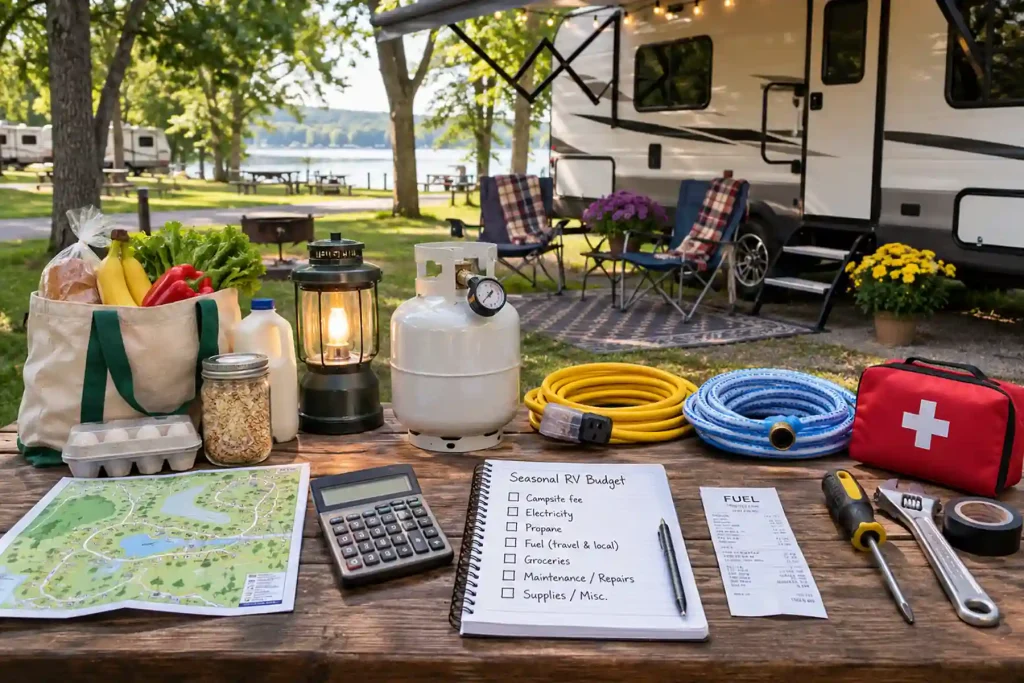
Seasonal RV camping offers a convenient way to enjoy the outdoors without packing up and moving your camper every weekend. Whether you’re spending weekends fishing, relaxing by the lake, or enjoying time with family, having a designated campsite throughout the season can make outdoor getaways easier to plan.
But before committing to a seasonal site, it’s important to understand the full cost of the experience.
While campground rates are usually the first expense RV owners consider, they’re only one part of the financial picture. Electricity, wastewater services, RV maintenance, insurance, transportation, and everyday supplies can all affect the amount you spend.
Understanding these seasonal RV camping expenses can help you compare campgrounds accurately, prepare for additional costs, and choose a campsite that fits your needs.
If you’re exploring seasonal RV sites near Omaha, here’s what to consider beyond the advertised campsite rate.
1. Seasonal Campsite Fees: Your Starting Point
Your campsite fee is usually the largest predictable expense associated with seasonal RV camping.
Unlike overnight reservations, seasonal camping allows you to keep your RV at a designated site for an extended period, typically several months.
Depending on the campground, seasonal rates may vary based on:
- Campsite location and proximity to recreational areas
- Waterfront or lake-view placement
- Site size and accessibility
- Electrical service availability
- Included amenities
- Length of the camping season
- Reservation terms and site availability
A standard interior site may cost less than a premium waterfront location, even when both provide access to the same general campground amenities.
Understanding Seasonal RV Site Rates Near Omaha
At Merritt Beach RV Park in Plattsmouth, Nebraska, the regular camping season runs from April 1 through October 31.
The campground’s currently published seasonal site pricing ranges from $1,800 to $3,900 per season, depending on the site category and location.
Available site options include interior placements, fishing lake views, and waterfront locations.
These published figures provide a useful starting point, but campers should always contact the campground to confirm current rates, availability, and applicable reservation terms before making a financial commitment.
When comparing seasonal campsite prices, ask whether the quoted amount includes utilities, deposits, or other charges.
The goal isn’t simply to find the cheapest site. It’s to understand what you’re receiving for the price.
2. Electricity: An Important Seasonal RV Camping Expense
Electricity can have a noticeable impact on seasonal camping costs, particularly during Nebraska’s warmer months.
Air conditioning, refrigerators, water heaters, lighting, and other electrical appliances contribute to overall energy usage.
Your actual consumption will depend on your RV’s size, equipment, insulation, occupancy, and how frequently you visit.
Understand Your RV’s Electrical Requirements
Most recreational vehicles are designed to use either 30-amp or 50-amp electrical service.
A smaller travel trailer may operate comfortably with 30-amp service, while larger motorhomes and fifth wheels may need 50-amp power to operate multiple appliances simultaneously.
Merritt Beach RV Park offers seasonal sites with water hookups and 30/50-amp electrical service options.
However, the availability of an electrical connection doesn’t automatically mean that electricity consumption is included in the campsite price.
Before reserving, ask:
- Is electricity included in the seasonal rate?
- Is electrical usage metered separately?
- Are there additional utility charges?
- Does the available site support my RV’s electrical requirements?
- Are there any restrictions on high-consumption equipment?
These questions help prevent unexpected charges and ensure your RV is compatible with the campsite.
How to Manage Electricity Costs
You don’t need to sacrifice comfort to use electricity more efficiently.
Simple habits can help reduce unnecessary consumption:
- Set your thermostat to a comfortable but reasonable temperature.
- Keep windows and doors closed while the air conditioner is running.
- Use window shades to reduce heat from direct sunlight.
- Maintain air-conditioning filters according to manufacturer recommendations.
- Turn off unnecessary lighting and appliances.
- Inspect door and window seals for gaps.
- Use fans when appropriate to improve airflow.
For more ideas, review the U.S. Department of Energy’s cooling recommendations.
Reducing unnecessary electrical consumption may help lower costs when usage is billed separately.
3. Water and Wastewater Services
Water and wastewater arrangements are among the most important details to understand when comparing seasonal campgrounds.
Not every RV park offers the same utility setup, and the term “seasonal RV site” doesn’t necessarily mean all utility services are included.
Water Hookups
A direct water connection makes seasonal camping more convenient because you don’t need to refill your freshwater tank as frequently.
However, you should confirm whether water is included in the seasonal site rate or subject to a separate charge.
It’s also worth checking your freshwater hose, fittings, pressure regulator, and any filters you regularly use.
Worn or damaged connections can cause leaks and unnecessary expenses.
Wastewater Pump-Out Services
Wastewater management can represent a recurring cost throughout the camping season.
Merritt Beach RV Park provides water and electric hookups but does not offer individual sewer hookups at its RV sites.
Instead, local wastewater pump-out providers can service RV holding tanks for an additional fee.
The total cost depends on factors such as:
- How frequently you use your RV
- The number of people staying in it
- Your freshwater and wastewater tank capacities
- The provider’s service fees
- How often holding tanks require emptying
For example, a couple using their camper primarily on weekends may require fewer pump-outs than a family spending extended periods at the campground.
Before choosing a seasonal site, ask how wastewater service is arranged and what local providers currently charge.
Accounting for these services helps you understand the true cost of camping beyond the site fee.
4. RV Maintenance and Unexpected Repairs
Even when your camper remains parked at the same site throughout the season, routine maintenance is still necessary.
Exposure to sunlight, rain, temperature changes, and everyday use can affect your RV’s exterior and mechanical components.
Regular inspections may help identify smaller problems before they become more expensive repairs.
Routine Maintenance Expenses
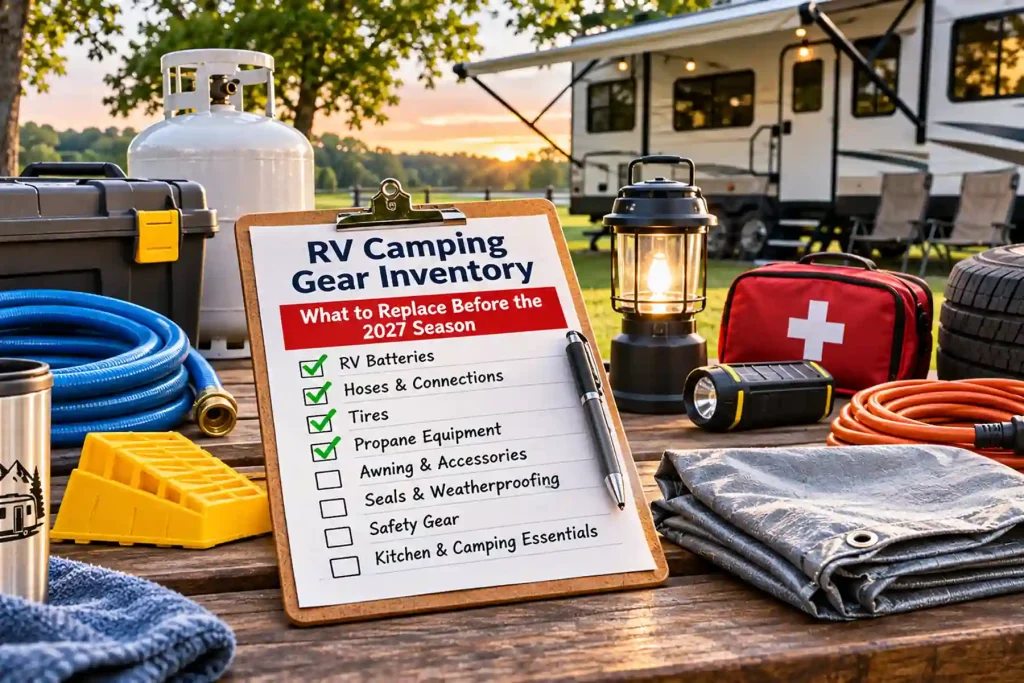
Depending on your RV, maintenance may include:
- Roof and seal inspections
- Tire inspections and maintenance
- Battery maintenance
- Air-conditioning service
- Plumbing and water-system inspections
- Appliance maintenance
- Exterior cleaning
- Replacement of damaged hoses and fittings
- Propane system inspections by qualified professionals
Maintenance requirements differ by RV model, age, and usage.
Following the manufacturer’s recommendations is generally more useful than relying on a single maintenance schedule for every camper.
Prepare for Unexpected Repairs
An aging water pump, a damaged roof seal, or an electrical problem can affect your camping plans and create unplanned expenses.
Setting aside some money for repairs can make those situations easier to manage.
The Consumer Financial Protection Bureau’s emergency savings guidance explains why having dedicated savings for unexpected expenses is useful.
Although general emergency savings and recreational camping expenses should be considered separately, the principle is the same: preparing for unexpected costs can reduce financial pressure when repairs become necessary.
5. RV Insurance and Registration
Insurance and registration are easy to overlook when calculating seasonal RV camping expenses because they’re often paid annually rather than during every camping trip.
However, they’re still part of the overall cost of owning and using an RV.
Insurance premiums may depend on your RV’s type, value, usage, storage location, coverage options, and other factors.
Before committing to a seasonal campsite, contact your insurance provider and explain how you plan to use and store the vehicle.
Ask whether your current policy addresses:
- Seasonal campsite use
- Liability coverage
- Theft and vandalism
- Storm or weather-related damage
- Personal belongings
- Storage arrangements
- Coverage exclusions and limitations
Don’t assume that keeping your RV at one campground throughout the season automatically changes your coverage or lowers your premium.
You’ll also need to account for applicable vehicle registration and other ownership-related expenses.
These costs may not appear on a campground invoice, but they still affect the total amount you spend on RV recreation.
6. Transportation and Fuel Costs
One potential advantage of seasonal camping is reducing repeated long-distance towing.
Instead of hauling your camper to a different destination each weekend, you can keep it set up at one campground and travel there using your everyday vehicle.
For people living in Omaha, Bellevue, Papillion, or nearby communities, choosing a campground within a reasonable driving distance may make frequent visits more practical.
Consider Your Travel Frequency
Transportation expenses depend on how often you visit the campground and how far you travel.
A family driving to its seasonal campsite every weekend will have a different fuel budget from a couple visiting twice a month.
When comparing campground locations, consider:
- Distance from home
- Fuel consumption
- Towing requirements
- Vehicle maintenance
- Time spent traveling
- Trips to nearby stores or attractions
Seasonal camping doesn’t eliminate transportation expenses, but it can reduce the need to tow and reposition your RV repeatedly.
Merritt Beach RV Park is located in Plattsmouth, approximately 30 minutes south of Omaha, making it a potential option for campers who want a recurring lakeside destination close to the metro area.
7. Food, Supplies, and Outdoor Recreation
Camping expenses extend beyond the RV itself.
Groceries, cooking supplies, cleaning products, outdoor furniture, fishing equipment, and recreational activities can add to the cost of spending time at your campsite.
Fortunately, these expenses are often easier to manage with a little preparation.
Food and Cooking
Eating at the campground can be an enjoyable part of the experience.
Outdoor grilling, preparing meals together, and enjoying breakfast beside the camper can make ordinary weekends feel like vacations.
However, frequent restaurant visits, grocery runs, and convenience purchases can increase spending.
Consider bringing frequently used pantry items, planning meals before each trip, and keeping reusable cooking supplies in the RV.
Camping Equipment and Accessories
Campers may also purchase equipment such as:
- Outdoor chairs and tables
- Grills and cooking utensils
- Drinking-water hoses
- Extension cords and approved RV accessories
- Insect protection
- Fishing equipment
- Camping lights
- Storage containers
- Outdoor games
Some purchases are one-time investments, while others require occasional replacement.
Avoid buying everything at once. Start with essentials and add accessories based on what you actually use.
Recreation and Entertainment
Campgrounds with on-site recreational amenities can provide activities without requiring a separate destination every weekend.
At Merritt Beach RV Park, guests have access to a swimming lake, a stocked fishing lake, and other outdoor recreation areas.
You can explore the campground’s RV park amenities in Plattsmouth to learn more about available activities.
While campground recreation can reduce the need for additional outings, campers should still account for personal equipment, applicable fishing permits, and any other activity-related expenses.
8. Off-Season RV Storage and Winter Preparation
For seasonal campers in Nebraska, the end of October doesn’t necessarily mean the end of RV-related expenses.
When the camping season closes, recreational vehicles need to be prepared for colder weather.
Winterization may involve draining water systems, protecting plumbing, caring for batteries, inspecting seals, and arranging suitable storage.
These tasks can involve supplies, professional service fees, or storage expenses.
Understand Your Storage Options
Merritt Beach RV Park’s regular camping season ends October 31.
The campground offers off-season RV storage from November 1 through March 31 for eligible seasonal guests, subject to lease and deposit requirements.
Because storage eligibility and related charges depend on the applicable arrangements, campers should confirm the details directly with management.
Guests who store their RV elsewhere should consider transportation, storage fees, winterization, and spring preparation costs.
For more information on protecting an RV during Nebraska’s colder months, read our article on preparing your RV for winter storage.
Winter storage is not the same as winter camping, so it’s important to understand the campground’s operating schedule.
9. Comparing Seasonal RV Camping Costs With Overnight Stays
A seasonal reservation may provide better value for RV owners who use their camper frequently, but that doesn’t mean it’s automatically the most economical option for everyone.
The right choice depends on the number of nights you expect to camp, the services you need, and the total cost of each arrangement.
For example, someone planning only a few weekends away may prefer individual overnight bookings.
On the other hand, a family expecting regular weekend getaways throughout spring, summer, and fall may appreciate having a designated site for the entire season.
Calculate the Cost Per Night Used
One way to compare options is to divide your total seasonal camping expenses by the number of nights you actually expect to use the site.
Cost per night used = Total seasonal camping expenses ÷ Nights spent camping
This gives a more realistic estimate than dividing the seasonal rate by every calendar night in the camping season.
For example, consider a hypothetical seasonal camper with the following expenses:
| Expense | Illustrative Cost |
| Seasonal campsite fee | $2,400 |
| Additional utilities and wastewater service | $350 |
| Transportation | $300 |
| Camping-related maintenance and supplies | $250 |
| Total seasonal expenses | $3,300 |
If the camper spends 40 nights at the campground, the estimated cost per night used would be $82.50.
If the same camper spends 60 nights there, the effective cost drops to $55 per night.
These figures are hypothetical examples, not Merritt Beach RV Park quotes or estimates of its utility and service charges. Actual expenses can vary considerably.
The example simply illustrates how campsite usage affects the value of a seasonal reservation.
It also excludes RV purchase costs, depreciation, financing, and other ownership expenses, which should be considered separately when comparing RV ownership with other forms of vacation travel.
For campground-specific pricing, review the RV park rates in Plattsmouth and request a current quote.
10. How to Compare Seasonal RV Sites Without Overlooking Extra Costs
Before choosing a seasonal campground, request a clear explanation of the rate and applicable additional charges.
You don’t need an elaborate financial system to compare your options. A simple list of questions can help you understand what you’re paying for.
Ask the campground:
- What is the total seasonal campsite rate?
- What dates does the reservation cover?
- Is electricity included or billed separately?
- Is water included?
- Are wastewater pump-out services required, and how are they arranged?
- Are deposits or other initial payments required?
- Which recreational amenities are included?
- Are there additional charges for guests, pets, or vehicles?
- What are the cancellation and payment terms?
- Is off-season storage available, and what conditions apply?
The answers can help you distinguish between a campsite that looks inexpensive and one that offers better overall value for your specific needs.
Frequently Asked Questions About Seasonal RV Camping Expenses
What are the biggest seasonal RV camping expenses?
The largest costs often include the seasonal campsite fee, RV ownership and maintenance, insurance, utilities, and transportation. Wastewater service, equipment, and off-season storage may also add to the total.
Is electricity always included in seasonal RV site rates?
No. Some campgrounds include electricity in their rates, while others meter usage or charge separately. Confirm the utility billing arrangement before reserving.
Does seasonal RV camping save money compared with overnight camping?
It can, particularly for campers who use their RV frequently throughout the season. However, the actual value depends on campsite costs, additional fees, travel expenses, and the number of nights spent camping.
Does Merritt Beach RV Park offer sewer hookups?
No. Merritt Beach RV Park provides water and electric hookups but does not have individual sewer hookups. Local wastewater pump-out providers can service RV holding tanks for an additional fee.
How much does seasonal RV camping cost at Merritt Beach RV Park?
The campground currently publishes seasonal site rates ranging from $1,800 to $3,900, depending on site placement and category. Confirm current pricing and availability directly with the campground, especially when planning a future season.
Is winter storage included with seasonal camping?
Merritt Beach RV Park offers off-season storage arrangements for eligible seasonal guests. Contact campground management to confirm eligibility, applicable lease and deposit requirements, and any associated charges.
Explore Seasonal RV Camping at Merritt Beach RV Park
Understanding seasonal RV camping expenses helps you make a more informed decision about where to spend your camping season.
Rather than focusing exclusively on the advertised campsite price, consider the complete experience: utilities, wastewater service, maintenance, transportation, recreational amenities, and the amount of time you’ll actually spend at the campground.
At Merritt Beach RV Park in Plattsmouth, Nebraska, seasonal campers can enjoy water and electric hookups, gated campground access, a swimming lake, and a separate stocked fishing lake.
Whether you prefer a standard seasonal site or a premium waterfront location, choosing the right campsite starts with understanding your options.
Ready to explore seasonal RV camping near Omaha?
Contact Merritt Beach RV Park to discuss current seasonal site rates, available campsite categories, and reservation details.
Call (402) 979-1196 to inquire about availability or schedule a campground tour by appointment.
Find a seasonal RV site that fits your needs, understand the costs before you commit, and make more time for lakeside memories.